

How to File a Roof Insurance Claim in Texas: A Step-by-Step Guide
July 14, 2026

This is a subtitle for your new post
Filing a roof insurance claim in Texas starts with documenting storm damage immediately, then reviewing the policy for deductible type and coverage level, contacting the insurer promptly, and scheduling an independent roofing inspection before the adjuster arrives. After the adjuster meeting, the settlement estimate should be reviewed line by line before repairs begin with a licensed Texas roofing contractor. Prompt documentation and an independent inspection are the two factors that most affect approval speed and payout accuracy.
Texas leads the nation in hail activity, and that single fact makes a roof insurance claim in Texas a far more common experience for homeowners than in almost any other state. Central Texas communities including Hutto, Round Rock, and Georgetown regularly see hailstorms and straight-line winds strong enough to damage shingles, flashing, and gutters within minutes. When that happens, a properly filed roof insurance claim in Texas becomes the fastest route back to a fully repaired home, though the process comes with its own rules, deadlines, and paperwork.
This guide walks through each stage of a roof insurance claim in Texas, starting from the moment storm damage is discovered and ending with the final repair completed by a licensed contractor. Homeowners dealing with hail or wind damage, along with property managers responsible for commercial roofs, will find the exact steps insurers expect, the documentation adjusters look for, and the mistakes that most often reduce a payout or delay approval.
Roof damage claims across this part of the state tend to follow a predictable pattern each spring and early summer, when severe thunderstorm season peaks across Hutto, Round Rock, and Georgetown. Understanding the sequence of steps ahead of time, rather than learning them during a stressful post-storm scramble, tends to produce faster approvals and more accurate settlements.
Why Roof Insurance Claims in Texas Are Different
Central Texas sits inside one of the most active hail corridors in the country, and that geography shapes nearly every part of how a roof insurance claim in Texas moves through the system. Homeowners in this region often face multiple hail events in a single year, each capable of producing damage severe enough to warrant a claim.
Beyond hail, tropical moisture pulled up from the Gulf combines with dry-line thunderstorms to create wind gusts capable of lifting shingles and damaging flashing even without visible hail. This mix of weather patterns, unique to the I-35 corridor and surrounding hill country, is part of why Texas consistently ranks among the top states for property insurance claims filed each year.
State law also moves faster than many policyholders expect. Texas Insurance Code Chapter 542 sets prompt-payment deadlines that require insurers to acknowledge, investigate, and resolve claims within specific timeframes. Missing those deadlines can trigger penalty interest owed to the policyholder, which makes understanding the timeline a practical advantage.
Deductibles add another layer of complexity. Many Texas policies apply a separate windstorm or hail deductible, often calculated as a percentage of the dwelling coverage rather than a flat dollar amount, while a standard all-peril deductible applies to other types of damage. Reviewing which deductible applies before filing prevents confusion later in the process. Additional guidance on consumer rights during a claim is available through the Texas Department of Insurance homeowner FAQ.
Step 1: Assess and Document the Damage Right Away
Safety comes first. A damaged roof should never be walked on, since hail and wind can weaken decking and shingles in ways that are not visible from the ground. Dated photos and video taken from ground level, along with interior shots of any water stains or ceiling damage, create the foundation of a strong claim file.
Wide shots of the entire roofline, followed by close-up shots of individual damaged areas, give an adjuster the full context needed to evaluate the claim quickly. Gutters, downspouts, window screens, siding, and any outdoor structures such as sheds or fences should be photographed as well, since a single storm event often damages more than just the roof.
The exact date the storm occurred should be recorded as well, since insurers and adjusters will ask for it directly. Local weather records can help confirm the timing of hail or wind events when the exact date is uncertain, and the National Weather Service Central Texas forecasts page keeps a running archive of regional storm activity that can serve as a reference point.
For confirmation of storm dates and severity in the region, the National Weather Service Central Texas forecasts page is a reliable public resource.
Step 2: Review the Homeowners Insurance Policy
Before contacting an insurer, locating the declarations page of the policy clarifies what type of deductible applies and how much coverage exists for the roof specifically. Percentage-based deductibles for wind or hail can be significantly higher than a flat-dollar deductible, so this step often shapes expectations for the rest of the claim.
Coverage type matters just as much. Actual cash value (ACV) policies factor in depreciation based on the roof's age, while replacement cost value (RCV) policies pay to replace the roof without that depreciation deducted upfront. Exclusions and waiting periods should also be checked, since some policies limit coverage for roofs past a certain age or with prior repair history.
Older policies sometimes include a separate roof depreciation schedule that reduces payout based on the roof's age at the time of the claim, even under an otherwise RCV policy. Confirming whether this type of schedule applies before filing avoids a surprise reduction in the final settlement check.
Homeowners who want a professional review of policy language and coverage limits before filing can request insurance claims assistance from a local roofing team familiar with Central Texas policies.
Step 3: Contact the Insurance Company Promptly
Most Texas insurers require notice of damage within a reasonable time after the storm, and delaying that call can complicate an otherwise straightforward claim. Having the policy number, the date of the storm, and a summary of visible damage ready before making contact speeds up the intake process significantly.
A brief description of the type of damage, whether roof, siding, gutters, or interior water intrusion, helps the insurer route the claim to the correct adjuster on the first call. Asking directly about the expected timeline for an adjuster visit sets clear expectations from the start.
A claim number and adjuster assignment should always be requested in writing, since a written record protects the policyholder if a dispute arises later. Storms severe enough to trigger a federal disaster declaration are tracked publicly, and the FEMA Texas disaster declarations page lists events that may qualify for additional relief or extended filing windows.
Step 4: Schedule a Professional Roofing Inspection Before the Adjuster Arrives
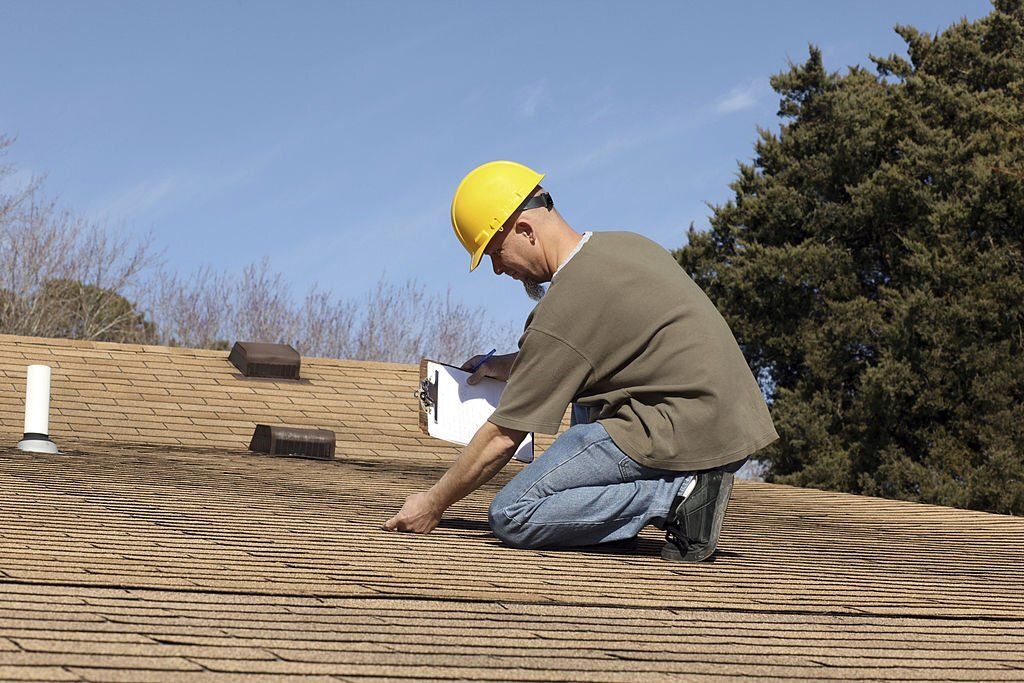
An independent contractor assessment completed before the adjuster's visit gives homeowners a second, unbiased set of eyes on the damage. Adjusters work on behalf of the insurance company, and a licensed roofer's inspection can catch damage that might otherwise be missed or underestimated.
A written inspection report from a licensed roofer, complete with photos and measurements, becomes a useful comparison point once the adjuster's own estimate arrives. Discrepancies between the two reports often form the basis for a stronger supplemental claim if needed.
This step is especially important for hail and wind damage repairs, where granule loss, bruised shingles, and soft spots are not always obvious during a quick visual inspection. Having a documented, dated inspection report in hand before the adjuster arrives strengthens the entire claim.
Step 5: Meet the Insurance Adjuster On-Site
Being present for the adjuster's visit, or having a roofing contractor present, allows for real-time questions and clarification. Adjusters typically evaluate the age of the roof, the type and extent of damage, and any evidence of prior repairs that might affect the claim outcome.
Adjusters also check for consistent wear patterns across the entire roof surface, since isolated damage in a single area can sometimes be attributed to age rather than the storm event. Pointing out specific damage locations identified during the earlier contractor inspection helps keep the adjuster's evaluation focused and complete.
Taking notes during the inspection and asking direct questions about what is and is not being covered helps avoid surprises later in the process. Homeowners working with a contractor that offers storm damage roofing services often find the adjuster meeting goes more smoothly, since a second professional is present to confirm findings match the documented damage.
Step 6: Review the Settlement Estimate Carefully
Once the adjuster's estimate arrives, each line item deserves a close look, including depreciation amounts, labor costs, and material pricing. Estimates built on outdated material costs or incomplete scopes of work are a common source of underpayment.
Comparing the adjuster's estimate line by line against the independent contractor inspection from Step 4 often reveals missing items, such as underlayment, decking replacement, or code-required upgrades that were not initially included. These gaps are frequently the difference between an estimate that covers the true cost of repair and one that falls short.
If the estimate seems too low compared to a contractor's independent assessment, a supplemental claim can be filed to request additional funds for damage or costs not included in the original scope. In cases where the insurer and the roofing contractor cannot reach agreement, hiring a public adjuster or invoking the policy's appraisal clause is an option worth discussing with an attorney or licensed public adjuster familiar with Texas claims.
Step 7: Choose a Licensed Texas Roofing Contractor
Verifying that a contractor holds proper licensing and carries active liability insurance protects against poor workmanship and future liability. Requesting proof of both before signing any agreement is a simple step that prevents major headaches later.
Storm chaser contractors, who appear in a neighborhood shortly after a major weather event and often leave the area once the work is finished, are a common source of complaints in Texas. Choosing a contractor with a permanent local presence and a verifiable track record reduces that risk substantially.
References from recent local jobs, proof of manufacturer certifications, and a written warranty covering both materials and labor are worth requesting before signing a repair contract. A contractor willing to walk through the approved insurance scope line by line, explaining what is covered and what is not, tends to deliver a smoother repair process overall.
A locally established roofing contractor in Round Rock TX with a physical presence in the community is generally easier to reach for warranty work or follow-up questions long after the claim closes.
Common Mistakes That Can Hurt a Roof Insurance Claim in Texas
● Waiting too long to file: delayed notice can raise questions about whether damage occurred during the claimed storm event.
● Making repairs before documentation is complete: repairing damage before photos and inspection reports are gathered removes evidence the insurer needs to approve the claim.
● Signing over the claim (AOB): an assignment of benefits agreement hands control of the claim to a contractor, which can limit the homeowner's ability to negotiate directly with the insurer.
● Skipping a contractor review of the adjuster's scope: accepting the first estimate without a second opinion often leaves money on the table.
Each of these mistakes shares a common thread: they remove documentation or leverage from the homeowner's side of the claim before the process is finished. Avoiding them costs little more than patience and organization, while the potential downside of making one of these mistakes can mean thousands of dollars in reduced coverage.
Frequently Asked Questions About Roof Insurance Claims in Texas
How long does a roof insurance claim take in Texas?
Under Texas prompt payment law, insurers generally must acknowledge a claim within 15 days, and accept or deny it within 15 business days of receiving all requested documentation, with a possible 45-day extension in certain circumstances. Straightforward claims with complete documentation often resolve faster than claims requiring supplemental review, though claims filed after a major regional storm event can take longer simply due to the volume of claims an insurer is processing at once.
What if a claim is denied?
A denial can be disputed by requesting a written explanation, providing additional documentation, or invoking the appraisal clause included in most Texas homeowners policies. A public adjuster or attorney experienced in property claims can assist when a denial appears inconsistent with the policy language or the documented damage, and a second, more detailed contractor inspection is often the strongest first step toward a successful appeal.
Is a specific contractor required for the repair work?
Texas law gives homeowners the right to choose any licensed contractor for repair work. No insurance company can require the use of a specific contractor as a condition of claim approval, and homeowners are free to compare estimates from multiple licensed contractors before agreeing to any repair scope.
Moving Forward with Confidence
Filing a roof insurance claim in Texas involves seven core steps: documenting damage immediately, reviewing the policy, contacting the insurer promptly, scheduling an independent inspection, meeting the adjuster, reviewing the settlement carefully, and hiring a licensed contractor for repairs. Each step builds on the one before it, and skipping any of them tends to slow the process down or reduce the final payout.
Central Texas homeowners face storm season year after year, and the difference between a fast, fully funded claim and a drawn-out dispute usually comes down to preparation. Keeping copies of every photo, report, and written communication throughout the process makes each subsequent step faster and reduces the chance of a denied or underpaid claim.
A free roof inspection is available for homeowners who want a documented assessment of storm damage before or after contacting an insurer. Scheduling an inspection through our website or calling (512) 379 7933 connects homeowners with a local team that can document damage, provide an accurate estimate, and assist through every stage of the claims process described above.
You might also like
You might also like
Need some roofing-related guidance?
Request a free consultation

Call us!
(512) 379 7933
Address
Schedule Your
Free Estimate
Protect your roof by booking a hassle free roof inspection today
Schedule Your
Free
Estimate
Protect your roof by booking a hassle free roof inspection today